

If you’re a recruiter or have been hiring lately, you know there’s a volume problem. Some friends and colleagues who work in HR have referred to sifting through the massive influx of applications as “drinking through a fire hose,” and it’s getting worse. What’s causing this problem, and what can you do about it?
The number of applications per hire has tripled (at least) in the past five years. Every posted open role floods the funnel with hundreds of hopeful job seekers looking for a safe place to land. Applications-per-hire climbed to 300 through 2025, and average recruiter “throughput” is now about seven hires per quarter.
Put another way, recruiters are sifting through over 2,000 applicants—including resumes, cover letters, and everything that goes into that process—every three months. That averages out to over 30 applications per open role per day. Four per hour, if all you do, all day, every day, is review applications. Your HR team has better things to do.
MAGIC SMOKE
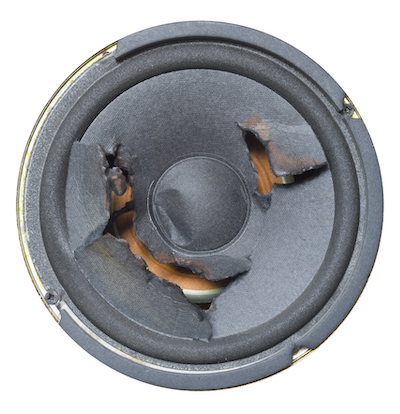
If you’ve ever blown a speaker by playing music too loudly, you’ve experienced a phenomenon called “clipping.” It happens when you amplify a signal too much—play a song too loudly—and it’s not optimal. It leads to complex, irreversible damage involving things like voltage rails, square waves, and other things I try not to get too close to.
Overpowering a speaker by feeding it more watts than it can handle can burn the varnish off internal wires, producing a distinctive smell that audio engineers often refer to as “magic smoke.” As in, “You let the magic smoke out; that equipment will never work again.”
This is the result of too much noise and not enough signal—like trying to find transformative talent in a growing pile of AI-assisted applications.
Technology was supposed to make the recruitment process more efficient and talent acquisition faster and more effective. Like any new technology, it cuts both ways. Anyone can pick it up and swing it in any direction they please.
It’s the perfect storm of “easy-apply” buttons and AI-generated resumes. It’s almost impossible to distinguish “looks good on paper” noise from the signal you’re looking for—that 1% that has the substance required to execute and deliver.
FROM DOCUMENTARY TO INFOTAINMENT
Sometimes it seems like everything is becoming commoditized in one way or another, and we owe that in large part to the internet. The first cat video on YouTube is a little over 20 years old, and since then, we’ve seen connected technologies transform almost every aspect of daily life. What began as a way to share a cute moment has morphed into a “discovery engine” that everyone—from lone “influencers” to Fortune 500 companies—is using to drive top-of-funnel efforts.

There was even a movement toward “video resumes” on the platform that peaked around 2022. While their efficacy is still debated, the phenomenon served as a predictor of an emerging trend—the commoditization of the resume.
With just a few prompts, any candidate can produce a polished, keyword-optimized CV that aligns perfectly with whatever job description you can name. Job hopefuls are learning to use AI to bypass applicant tracking systems (ATSs), a fire-with-fire approach to crack the firewall of companies using AI to filter those same candidates.
The barrier to entry is so low that the cost of applying approaches zero. The result is a flood of low-intent candidates who, on paper, look like the real deal. The resume has shifted from a record of accomplishments to a marketing asset optimized for algorithms. The side-effect is as counter-productive as it is pervasive. If everyone looks like “top 1% talent” on paper, then, by definition, no one does.
“YEARS OF EXPERIENCE” MEETS GROUNDHOG DAY

For decades, the standard metric for competency was time. If you asked for “5–7 years of experience” in a specific software or vertical, you had a pretty good chance of finding someone with expert-level knowledge and a carefully honed skillset. This strategy worked in a stable, slow-moving economy. Rapid tech disruption and increased “algorithm ambiguity” make it a failing measure.
A candidate with ten years of experience might actually have one year of experience, repeated ten times. They may have mastered a set of tools or a legacy process that’s obsolete, or learned and re-learned different tech stacks or internal processes over and over, changing with each employer and each new position.
The truth is that technology makes everything move faster, and the half-life of specific skills is rapidly shrinking. What matters now isn’t how long someone has been in one seat or another, but how adeptly they can navigate an unpredictable, unsolved future.
SEPARATING SMOKE FROM MAGIC

The hiring process has become like the feedback loop that results in standing too close to an amplifier with an electric guitar. Any signal that might have been detectable in a resume five years ago has been lost in the noise of AI-tuned and distributed job applications. It’s getting worse, and without some way to cut through the overdrive, it can let the “magic smoke” out of your hiring process.
To find the true Maestros, you need to isolate the noise so you can hear the right song. Shifting the focus from what someone has done to how they think gives you clear insights into their ability to adapt, adjust, and navigate novel environments.

Whether you call it evidence-based or skills-based hiring, whether you’re looking to remove barriers or reduce bias, the trick is to eliminate the noise. A clear signal without too much amplification can carry a melody and deliver it intact … you may just have to listen a little more intently. So how do you isolate the tune from the static?
Some of the best musicians—from The Beatles to Taylor Swift—never learned to read musical notation. Some of the most valuable employees are those who don’t need a map. This is especially true for a startup or an enterprise undergoing transformation, where the map changes every quarter.

Evidence-based hiring looks for candidates who can take a vague objective, like “We need to enter the APAC market,” and build the necessary framework from scratch. Improv, whether it’s on stage or behind a desk, requires talent.
High-level candidates treat their career path like a series of complex, interconnected puzzles. They don’t just execute tasks. They understand the “why” behind the “what” on an almost instinctual level. They learn the tactical overview along with current processes. The former is an evergreen skill that they take with them on their journey. The latter quickly becomes yesterday’s way of doing things.
HIRE FOR “HOW”
The ultimate goal of separating the signal leads to a fundamental shift in hiring philosophy. When you stop filling roles based on what someone has done and start hiring for how they think, you’re turning down and tuning out static data points. A top performer isn’t someone you can measure by past accomplishments, which are all those data points represent.

You’re looking for a dynamic range of thought that can solve problems that are six months in the future. Stop looking for the person who may be best at getting hired, and start looking for the people who are the best at doing the work.
As AI tools become more sophisticated, the noise will only get louder. The companies that win the next decade won’t be those with the most efficient ATS filters, but those that can see past the digital veneer.
Look for the people who thrive when the lights go out and the manual is missing. That’s where the signal lives.
Need a way to audit your hiring process and turn down the noise? Drop us a line at mastery@maestrogroup.co so we can help you tune your recruitment strategy.