

As human biases go, the salience bias seems the most obvious, which makes it easy to overlook. Did someone really have to do research to show us that, if you show someone an image of a bunch of green dots and a single red dot, our attention automatically goes to the red one? See? Obvious.
But I caution you not to dismiss the salience bias just because of its self-evidence. From a sales perspective, it can greatly impact whether we get in front of clients as well as how they see us. From a business perspective, understanding the salience bias can save us from cost overruns. It can even teach us how to plan for huge endeavors like disaster recovery.
WHAT IS THE SALIENCE BIAS?

The salience bias is the human tendency to focus on information that stands out—whether due to prominence, emotional impact, or vividness. Often, this means that the less noticeable, less emotion-triggering details fade into the background.
An example is when you see a commercial showing off the beautiful design and speed of a vehicle. These features stand out to you, and you may forget that it has terrible gas mileage and will constantly be in the shop.
The salience bias served our ancestors well. Quickly noticing differences in the environment is a survival mechanism. Also, if we paid equal attention to everything, we would quickly become overwhelmed. Humans tend toward a state of cognitive ease to conserve mental effort. The salience bias is what allows us to be quickly shaken out of our relaxed state.
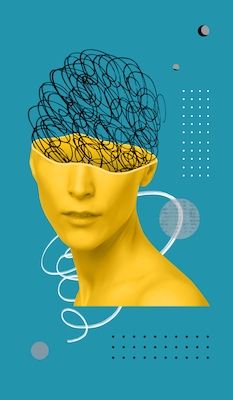
Livia De Picker does an amazing job explaining salience in her TEDx talk by detailing what happens when the system breaks down. She explains that when we see something that stands out in some way, our brain releases a shot of dopamine. When people have a psychotic illness, the brain stops filtering out the mundane.
Everything becomes salient, and the individual experiences a constant flood of dopamine. What was once a random car parked on the street that they could ignore becomes someone spying on them.
We need our brains to parse the world into things that stand out and things that don’t, but the salience bias can also lead to some suboptimal decisions. Like if you chose to buy the beautiful sports car … and now it’s in the shop.
USING THE SALIENCE BIAS
The salience bias clearly impacts what we choose to purchase, but in sales, it goes well beyond the basic idea of waving shiny objects in front of someone’s face.
Zoom Calls

The early work on salience was done in 1975 by American psychologists Shelley Taylor and Susan Fiske. They coined the term “perceptual salience” when they conducted a study in which observers saw two actors performing—one whose face they could see and one whose they couldn’t.
The observers reported that the actor whose face they could see played a larger role in the scene. But he hadn’t. It just seemed that way because he had been more visually salient.
There are so many reasons to always have your camera on during Zoom calls and to encourage your prospects to do the same. Here’s one more: when people can see you, what you’re saying automatically becomes more important because of the salience bias.

We’re all flooded with hundreds of emails a week. It can seem like an impossible task to get any cold emails opened. Keep the salience bias in mind when you’re crafting your subject lines and the first line of your message. Make the copy about what the recipient cares about. Make it about a pain point that they’re currently experiencing.
With some audiences, it can even be beneficial to craft email subjects and copy that are simply unexpected. Eliciting a “wait, what?” response can be enough to make a message stand out. A perfect (non-email) example of this is Patagonia’s “Don’t buy this jacket” Black Friday ad campaign, which increased its sales by 30 percent.
Unique Value Proposition
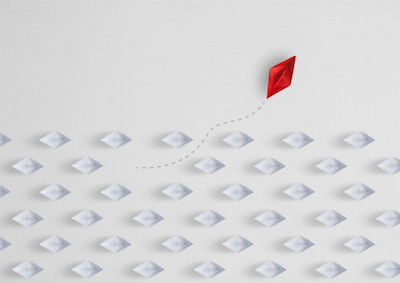
Most of us sell against competitors offering something similar. So, what makes your product or service truly different? That is what you need to highlight. In other words, make sure the shiny object in your marketing materials is the one that nobody else has. And then make it stand out to your prospects.
WHEN TO BEWARE OF THE SALIENCE BIAS
Like most of the behavioral biases we’ve covered, the salience bias can be both helpful and harmful. Being aware of its impact in certain situations can keep you from regretting your decisions.
Sales Cycles

Are your sales-cycle estimates off? You likely have a very good idea of how long deals stay in certain stages in your cycle, namely the ones you have more control over. You know that you often end up doing one demo for your champion and have to do a second demo later for your prospect’s IT team.
But what about the elements that aren’t as salient to you because you aren’t as involved? How long will it take the deal to get through procurement and legal? Make sure you’re asking the right questions about these elements so you can have an accurate idea of when the deal will close.
Project Management

You’re leading the development of a new feature for your best-selling product that your customers have been asking for. When you estimate how long it will take and how much it will cost, it’s easy to focus on the highly visible elements like product development and marketing while forgetting about compliance requirements and logistical hurdles. Be sure to factor in these less salient activities to avoid late deliveries or cost overruns.
Risk Assessment

Are you scared of sharks? Nervous about plane crashes? The salience bias makes us horrible at assessing risky behavior. Add this to the fact that media outlets want to tell the most salient stories to gain viewership, and you have everyone worried about something that has little to no chance of happening.
Disaster Recovery

After a natural disaster or a war, humanitarian aid usually floods in (as it should). But years later, many of the communities impacted by the disaster have not fully recovered and might not be any better prepared to deal with another disaster.
Obviously, there are many reasons for this, but one of the big ones is the salience bias. Getting people food and housing is much more salient in our minds than things like funding long-term infrastructure.
The salience bias just might be the trickiest of the human biases. We rely on it quite literally to keep us sane. If everything were salient to us and triggered a dopamine hit, we would spiral out of control. Plus, it seems so obvious.

Do we focus on information that stands out because it’s vivid or elicits an emotional reaction? Of course, we do. This combination of dependency and obviosity makes it easy to ignore, but doing so quickly leads to misjudgment.
So, when the stakes are high, pay attention to what you’re paying attention to, and ask yourself what you’re missing.
How salient is your sales messaging? Reach out to mastery@maestrogroup.co to learn more about how we can help you craft content that stands out.