
“Assume a frictionless surface” may have cut it in high school physics, but the world outside of classrooms can be messy, and that can be especially true in B2B sales. Friction is almost always present in one measure or another. Sometimes, it’s traction—when a prospect asks insightful questions, that can be a sign the deal is moving along as it should.

And sometimes it creates a lot of heat and noise as your deal momentum grinds to a halt in a shower of sparks and unspoken objections. If the evaluation phase drags, your champion goes quiet for a few days, or procurement review takes longer than expected, the instinct to “do something!” can be overwhelming.
For many reps, the default move is as old as commerce itself: drop the price.
It seems like a reasonable solution—on the surface. Lowering the cost reduces friction, increases perceived ROI, and gives your buyer a clear reason to sign today, rather than next month, after that end-of-quarter metric goes whizzing by overhead. Offering discounts feels like a proactive value-add that helps the deal cross the finish line.
Only it doesn’t do that.
In practice, unprompted discounts trigger a series of psychological responses across every member of the buying committee. It’s a blinking red light that shifts your buyer’s focus from core business outcomes and the cost of doing nothing to price negotiation. At the end of the day, unexpected price cuts introduce unnecessary suspicion and fracture consensus.
B2B Buyers Can Smell Fear
Your price should be more than just a number. It should accurately reflect the true value of your solution. When you establish that initial price during the discovery and proposal phase, you’re setting a psychological anchor point. Done right, it’s an opportunity to demonstrate how your solution solves a specific, high-value problem.
When a deal starts to lose speed and a rep offers a discount—cutting an arbitrary fifteen percent off the total contract value as end-of-quarter looms or a decision committee starts moving in quarter-inch increments—your buyer isn’t going to think, “What a great deal!”

They’re going to question your original price and the actual value of what you’re offering.
Unprompted price drops signal desperation. Your buyer might think that your original price point was arbitrary. If you can drop fifteen or twenty percent without any change in scope, your solution wasn’t worth the full price to begin with. Even if the full price looks convincing, your buyer will understand that, for one reason or another, you need this deal more than they do.
Worse still, price cuts without negotiation or some kind of trade-off raise doubts about your solution’s real capabilities or the quality of post-sale support they can expect.
When you try to regain momentum by cutting the price, you demonstrate that the original deal held dead weight—whether or not that may be factually true. Buyers are smart. They’ll know that they’ve got the upper hand, either because the deal isn’t as good as it looks or because there’s some other external pressure that changes the dynamic.
Your buyer’s sense of urgency disappears, replaced by a smart, reasoned decision to wait, push harder, and see just how much lower your price can go.
Value vs. Price
Successful B2B deals rely on value realization. Your buyer should be asking questions about how your solution can lower their operational overhead, onboarding and time-to-value, and (ultimately) how what you’re selling can help them hit their key targets for the next quarter and beyond.
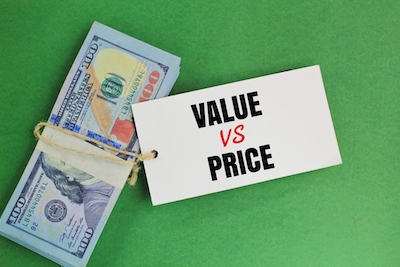
If you introduce an unprompted discount, you pull your buyer out of this productive, strategic mindset and into a transactional one. You shift the focus from what your solution can do to what it costs.
This is where cognitive bias kicks in. Once your buyer sees the deal less as a partnership and more as a negotiation, they stop thinking about the value of solving their core business problem and start looking for the basement in your pricing structure. The original business case you worked on so diligently—strategic alignment, ROI projections, the pain points carefully uncovered during discovery—becomes nearly irrelevant.
Price negotiation is inherently slower than value evaluation and, in many ways, directly counterproductive. Determining value means aligning on business goals while bargaining calls for tactical maneuvering, legal reviews, and financial scrutiny.
By shifting the focus to price, you trade a conversation that can build trust and momentum for a debate that can make your prospect lose faith in you, your process, and your solution.
And debates take longer than conversations.
Sabotaging the Buying Committee
Modern B2B buying decisions are complex purchases, famously involving an ever-increasing number of stakeholders, each with different priorities, risk tolerance, and incentives. Building deal momentum means helping your internal champion create consensus across a buying committee whose members are all pulling in slightly different directions.

When you drop an unprompted discount into this kind of environment, you scatter stakeholder alignment and introduce doubt.
Every buying committee has skeptics. These are the folks in finance, risk, or procurement whose jobs mandate they look for reasons to pause or reject an initiative. An unprompted price drop gives this kind of stakeholder something to latch on to, a reason to argue waiting another month. “If they dropped the price by fifteen percent without even being asked, what will they offer if we wait until next month?”
It can also make your champion look uninformed or incompetent. They built their internal pitch based on your initial proposal. They invested their internal social capital in your product by giving careful insight into why your solution was worth the investment.
When you suddenly lower the price without a change in scope, you make your champion look over-eager, maybe even a little naïve. To leadership, this can look like a willingness to let the company overpay.
And then there are the review cycles. A lower price point typically alters contract terms, payment schedules, and approval thresholds within your buyer’s organization. Introducing a price change, especially late in a sales cycle, usually means more loops through legal, finance, or procurement, which effectively resets the approval clock.
Conservation of Momentum: What to Do Instead of Discounting
If unprompted discounts destroy deal momentum, how should you handle stalled deals or buyers who ask for lower pricing? Back your deal. Preserve the integrity of your proffered value while being open to—but in control of—negotiation.
Don’t Give It Away—Trade It

If your buyer is up against real budgetary constraints, any discount has to come with a trade-off in scope or terms. If they ask for a ten percent discount on your annual fee, adjust your onboarding support to reflect it, or ask to bump their commitment up from one year to two.
Trading value this way reinforces the fact that your pricing is deliberate and grounded in reality (which it should be). More importantly, it prevents any perception of arbitrary pricing.
Find the Real Objection

Deals rarely stall over price alone. They stall over unaddressed risk, lack of internal consensus, or a committee with competing priorities. When a deal starts to lose momentum, resist the urge to pull the price lever to get it going again. Instead, lean into direct, diagnostic questions.
“Typically, when timelines slip at this stage, it means there are unaddressed questions around implementation or internal priorities. What’s the biggest hurdle we need to address together right now?”
Addressing the root cause of unseen friction this way builds trust, while throwing discounts at unaddressed risks can seem like willful ignorance or desperation.

Urgency Based on Outcomes, Not Deadlines
If your sense of urgency is tied to your end-of-quarter target, you’re looking at a deal from the wrong end. Good deals need to be tied to your buyer’s timeline for achieving their goals. Remind the committee of the cost of inaction—“What happens if you do nothing?”
Delaying the project by a month means delaying their revenue or cost-savings goals by the same timeframe. Pointing out these true financial metrics puts the focus back on value—not on what the price “should have been” all along.
Deal Momentum Relies on More

Real pipeline momentum is built on trust, clarity, and value alignment, and rarely on artificial concession. Unprompted discounting signals insecurity, and that triggers doubt, disrupts internal consensus, and shifts conversations away from outcomes. The next time a deal looks like it’s slowing down, resist the temptation to drop the price.
Protect your value, find the source of the friction, and help your champion guide their buying committee over the objections standing between them and their goals. When it comes to pricing and deal velocity, less is rarely more. Confidence, value, and strategic alignment matter most. Make sure you have all three.
Need help protecting—and projecting—your solution’s value? Reach out to mastery@maestrogroup.co for a framework you can use to close deals without offering unexpected discounts.