

Two weeks before the end of the quarter can feel a little like an establishing shot from whatever Wall Street movie comes to your mind first. Frantic typing, even more frantic calls, overheard conversations that sound like an auction … if it ran backward. Sales reps are doing everything they can to close, including offering discounts in a last-ditch effort to successfully reach the signature line, the finish line, and hopefully the bottom line.
To the untrained eye, this probably looks like incredible momentum. Business is being done, deals are being made, and the sales team is redeeming the last three months of effort in a glorious rush of plans coming together. Everyone’s happy.
Until they’re not.
Three months later, reality hits. Your implementation team is buried by support tickets, and onboarding feels like trying to fit a white-hot square peg into a round, fiery hole. Worst of all, all of those quick-win, in-before-the-end-of-quarter customers are churning. How did this happen? Everything seemed to be moving so quickly.
Your team didn’t suffer from a lack of momentum—they suffered from a basic misunderstanding of physics. Speed is not the same as velocity.
How Sales Reps Are Like Astronauts

It turns out that sales can be a lot like rocket science, after all. At any given moment, even right now, your speed can be measured by the distance you’re traveling over a specific interval. Miles per hour, kilometers per second, it doesn’t matter. Even if your current speed is a “resting state,” that’s still a speed of zero—no distance traveled over whatever time frame you avoid getting your steps in.
It turns out speed isn’t the most important thing. It wouldn’t mean much to you if I were to say you’re traveling at just under 30 kilometers a second, or the better part of 67,000 miles per hour, relative to the sun. So what? Your dry cleaning isn’t waiting for you in the sun. And we’re just going in circles.
Speed without a meaningful direction doesn’t accomplish much. In sales, speed without direction doesn’t build a sustainable pipeline—it just turns your go-to-market strategy into an unguided rocket. When an unguided rocket launches, it rarely lands on the moon. If we’re lucky, it takes out an empty parking lot. Some have ended up in more unusual places, but (again) one assumes it was somehow accidental.
The Physics of a Bad Close: Speed vs. Velocity

High school physics teaches us a simple distinction: speed is a scalar quantity, while velocity is a vector. Don’t worry, I’ll explain it (and I had to refresh my memory to make sure I had this right). Speed only tells you how fast something’s moving, but not where it’s going (for example, “We closed 40 deals this month!” doesn’t tell you anything about value).
Velocity is what matters here. Velocity measures speed, but more purposefully. It must be in a specific direction, toward a defined goal. “We closed 40 high-fit, high-LTV deals this month, with a forecasted 95% retention probability.” That tells you a lot more than “40 deals!”
When sales leadership mandates shortening the deal cycle without establishing guardrails, reps will typically default to pure speed. They bypass proper discovery, ignore red flags, and gloss over fit gaps—anything to streamline.
The problem here is that selling fast in the wrong direction creates three massive organizational bottlenecks.
1. Catastrophic Churn
If you land buyers who were swayed by a last-minute discount rather than a genuine solution to their problem, how long is that likely to last? When they stop feeling excited about the great deal they just got, they’ll realize your product doesn’t solve their core problem.
2. Implementation Drag
Bad-fit customers typically require double the onboarding effort, which pulls your support resources away from your ideal customer profile and away from deals with longevity.
3. Rep Burnout
Closing deals that inevitably blow up creates a highly demoralizing loop of high pressure with zero real momentum.
Traveling fast, as we see from our initial example, doesn’t mean much if you end up back where you started a year later. Or worse, out of business or looking for a new career. No pressure.
The Psychology of the “Fast-Deal” Trap
Why do smart salespeople fall into the speed trap? Like so many other aspects of sales, it comes down to basic human psychology—on both sides of the table.
Panic-Driven Urgency

When reps focus solely on speed, they may resort to artificial urgency. “We need you to sign by Friday to lock in this 20 percent discount.” Do you really?
Psychologically, this may be intended to trigger your buyer’s “fear of missing out,” which is a catchier way of saying loss aversion. While loss aversion can push a contract over the line, it also bypasses the buyer’s internal rational decision-making framework.
When the urgency fades, buyer’s remorse sets in almost immediately. And when your buyer realizes the urgency was manufactured, you’ve lost credibility, trust, and likely a customer. Don’t take my word for it—studies show that relying on loss aversion to close sales can help your competitors.
The Dopamine Spike of the “Closed Won”
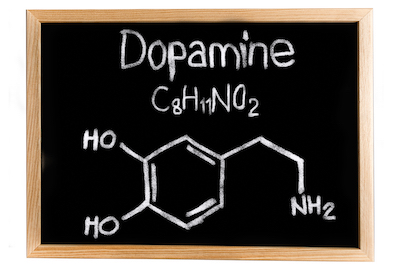
Closing a deal provides an immediate dopamine hit. The CRM flashes green, the team sends celebratory emojis, and the rep secures a commission check. This can be a problem in a few ways. Our brains are wired to favor immediate rewards over delayed consequences.
When success is measured in closed deals per quarter (which looks an awful lot like a variation of the formula for speed), it doesn’t mean those deals are going in the right direction. Reps face more psychological friction from missed quotas than from customers who churn eight months later. A sales rep’s brain learns to chase the immediate thrill of the close, regardless of whether the buyer is a good fit.
The Sales Velocity Diagnostic: Where Is That Rocket Going to Land?
To build a high-performing sales organization, you have to redefine sales velocity to emphasize deal quality, psychological alignment, and long-term fit.
Ask your team these four diagnostic questions to determine if you’re building sustainable velocity or just moving fast in a random direction.
| Diagnostic Focus | Speed | Velocity |
| 1. The Discovery Phase | “Did we check all the boxes and pitch our features as fast as possible?” | “Did we uncover the buyer’s deep emotional and business pain points?” |
| 2. Handling Objections | “How fast can we discount or overcome resistance to get a ‘Yes’?” | “Are we diagnosing resistance to determine if this is a real fit or a bad lead?” |
| 3. Mutual Agreement | “Did the prospect sign the standard contract?” | “Do both parties clearly understand the roadmap to real value realization?” |
| 4. End-of-Quarter Push | “What concessions can we throw out to hit this month’s quota?” | “Which deals are naturally ready, and which ones are being forced?” |
3 Psychological Shifts Focused on Real Sales Velocity

If you want your sales force to move fast and land on target, shift the focus from speed to guidance.
1. Pivot from Urgency to Agency
Stop it with the fake deadlines. Seriously. They know. Instead, tap into your prospect’s intrinsic motivation. Help them see the cost of inaction—what happens if they do nothing. When a buyer realizes that staying still costs them more than moving forward, they push the timeline, giving you both speed and high intent.
2. Disqualify Aggressively
Real sales velocity isn’t about moving every lead through the pipe faster. It’s about making sure bad leads either don’t enter or get removed the moment they’re recognized as bad fits. Giving your reps permission to say, “Based on what you’ve shared, I don’t think we’re the right fit for you right now,” builds trust and agency.
It also makes room for high-fit prospects and qualified deals, which is what your sales team should be focused on over “meeting quota.”
3. Measure Time-to-Value, Not Just Lead-to-Close
Track how quickly a closed customer achieves their time-to-first value. When compensation or recognition relies on successful customer onboarding and retention rather than just initial contract signature, reps naturally realign their vector toward long-term fit.
Aim First

Speed is great if it’s controlled and directed. Vector makes all the difference. A team closing $50k deals in one month that will go on to churn in six will lose to a team closing $75k deals in two months—with clients that will stay for five years.
Don’t let that end-of-quarter pressure turn your sales force into an unguided rocket. Focus on psychological alignment, qualify relentlessly, and make sure every deal close carries the directional weight of actual sales velocity.
Need help getting your sales team out of orbit and on target? Contact ground control at mastery@maestrogroup.co for a successful reentry.